The Division of Organic Chemistry is pleased to announce the call for nominations for the inaugural Amos B. Smith, III Award. The award recognizes innovation, collaboration, and leadership in organic chemistry and will be presented at NOS 2027 at the University of Minnesota on July 25–29, 2027. The nomination deadline is September 15, 2026. Submit …
The Division of Organic Chemistry is pleased to announce the inaugural Amos B. Smith, III Award, which will be presented at the 2027 National Organic Chemistry Symposium (#NOS2027). We’re currently raising funds to endow the award, which will join the Gassman and Leete Awards. We kindly request your support. Contact the Division Treasurer for donations …
The Organic Division requests nominations for the Paul G. Gassman Distinguished Service Award, which recognizes outstanding service to the organic chemistry community. Nominees must be long-standing members of the Organic Division who through their contributions to the organic chemical community in the United States have significantly enhanced the welfare of its members. Contributions to ACS …
To recognize innovation, collaboration and leadership in organic chemistry.
Nature
The award consists of $5,000 and a cut crystal plaque. The award will be presented biennially at a high-profile conference (e.g., the National Organic Chemistry Symposium). Travel expenses to attend the award ceremony will also be provided.
Inaugural Award: The first Amos B. Smith, III Award will be presented at the 50th National Organic Chemistry Symposium (NOS 2027), to be held at the University of Minnesota from July 25–29, 2027.
The Smith, Leete, and Gassman Awards are the only three awards selected by the Executive Committee of the Organic Division.
Establishment
The Amos B. Smith, III Award was established by the ACS Division of Organic Chemistry to honor the legacy of Professor Amos B. Smith, III (1944-2025), whose distinguished career exemplified the highest ideals of organic chemistry: transformative scientific achievement, sustained mentorship, and exceptional leadership to the scientific community.
The award is designed not merely to honor excellence but to help define it for future generations. Through this award, the Division seeks to foster the continued advancement of organic chemistry by celebrating those who embody Professor Smith’s commitment to scientific discovery, collaboration, and service.
Support the Award
Contributions to the Amos B. Smith, III Award Endowment can be made through the GiveLively donation page. For donations of $5,000 or more, or to arrange ongoing monthly contributions, please contact the Division Treasurer (Joseph Ward).
Rules of Eligibility
Nominees must be members of the Organic Division of the American Chemical Society who have made significant contributions to organic chemistry research, collaboration, and leadership.
Nominations
Nomination packages should provide evidence of the candidate’s contributions across the award criteria. The nomination letter (3 pages max, with minimum font size 11pt), seconding letters (up to 2, 3 pages max each, with minimum font size 11pt), and the candidate’s C.V. should be submitted as a single PDF file via the online form (please name the PDF file with the candidate’s name (for example: JohnSmith-SmithNomination.pdf).
Deadline: The due date for the 2027 award nominations is September 15, 2026.
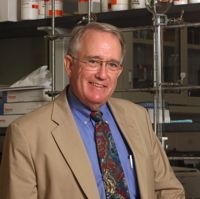
About Amos B. Smith, III (1944-2025)
Amos B. Smith
Amos was born on August 26, 1944, in Lewisburg, PA, and was the only child of Mildred E. (Cornelius) Smith and Dr. Amos B. Smith, Jr. In 1966 Amos was the recipient of the first combined B.S.-M.S. degree in Chemistry from Bucknell University, where he studied under the mentorship of Harold Heine and published his first two papers. After a year of medical school at the University of Pennsylvania, Amos decided his real passion was chemistry and moved to The Rockefeller University in New York City, where in 1972 he earned a Chemistry Ph.D. under the mentorship of Bill Agosta. After graduation he accepted a joint appointment at the Monell Chemical Senses Center and the Department of Chemistry at the University of Pennsylvania. In 1981 he became a full member of the Monell Chemical Senses Center and rose to the rank of Professor of Chemistry. From 1988-1996 he served as Chair of the Chemistry Department. He held the Rhodes-Thompson Endowed Professorship of Chemistry from 1990 until his move to Emeritus status in 2024.
Smith’s research interests encompassed three diverse areas: natural product synthesis, bioorganic chemistry and materials science. More than 85 architecturally complex natural products were prepared in his Laboratory. In addition, Smith, in collaboration with Ralph Hirschmann, achieved the design and synthesis of non-peptide peptidomimetics of neuropeptideic hormone/transmitters and protease enzyme inhibitors and, also with Stephen Benkovic (Penn State), haptens for the production of catalytic antibodies capable of peptide bond formation. At Monell, in collaboration with Peter Jurs (Penn State), he pioneered the use of computerized pattern recognition techniques for the analysis of primate chemical communication. Collaborative programs at the LRSM include the chemistry and physics of novel liquid crystals and the fullerenes. More recent studies with the late Professor Robin Hochstrasser involved the development of ultrafast photochemical triggers to explore peptide/protein folding.
Amos was recognized for his contributions to science by numerous national and international awards including the Arthur C. Cope Scholar Award (1991), the ACS Ernest Guenther Award (1993), the ACS Award for Creativity in Organic Chemistry (1997), the Centenary Medal, Royal Society of Chemistry, London, (2002), the Yamada Prize (Tokyo, Japan) (2003), the Order of the Rising Sun, Gold Rays with Neck Ribbon from the Government of Japan (2004), RSC Simonsen Medal (2008), Inaugural Fellow, American Chemical Society (2009), D.Sc. (honoris causa), Queens University, Belfast, Northern Ireland (2009), the William H. Nichols Award from the New York Section of the ACS (2014), and the Gassman Award (2014).
Nominees must be members of the Organic Division of the American Chemical Society who have made outstanding contributions to both teaching and research. Teaching should be considered in the broadest sense, including of professional chemists, the dissemination of information about chemistry to prospective chemists, to members of the profession, to students in other areas and …
The Organic Division is always excited to have the Cope and Cope Scholar Awardees present their work at the ACS Fall Meeting. This year, the ORGN Program Chairs (Scott Bagley, Emily McLaughlin, and Steve Silverman) are sharing this slide to honor the 2024 awardees who will present their work at the upcoming ACS National Meeting …
The Organic Division requests nominations for the Paul G. Gassman Distinguished Service Award, which recognizes outstanding service to the organic chemistry community. Nominees must be long-standing members of the Organic Division who through their contributions to the organic chemical community in the United States have significantly enhanced the welfare of its members. Contributions to ACS …
ACS Catalysis Lectureship Award for the Advancement of Catalytic Science honors an individual or a collaborative team for recent and significant contributions to the field, which appeared as a publication in ACS Catalysis within the last three calendar years. The lectureship recognizes a publication that provides a distinctive, creative, and impactful contribution to catalysis science. Special consideration will be given to early-career researchers as well as to the originality and impact of the article on the field of catalysis as a whole. For more information see the 2023 editorial entitled “Changes to the 2024 ACS Catalysis Lectureship Awards” by Cathleen Crudden, Editor-in-Chief of ACS Catalysis.
Sponsorship of the ACS Catalysis Lectureship:
The ACS Divisions of Organic Chemistry (starting with the 2024 award) and Catalysis Science and Technology (CATL) (since 2012) are partnering with ACS Catalysis to provide the award
Nature of the Award:
The corresponding author of the recognized article will receive 1) an award plaque (separate plaques if two corresponding authors); complimentary registration for ACS Fall meeting; 3) travel funds (US$2,500) to attend and present at the ACS Fall National Meeting. Note: If two corresponding authors are to be recognized, the honorarium and travel funds will be split between them.
Eligibility:
Self nominations are welcome and encouraged.
Nominated articles must have been published in ACS Catalysis within the corresponding 3 calendar years either in an issue or ASAP. (i.e. for the 2024 award the work must have appeared in 2021, 2022 or 2023).
Nominees’ work must be in the area of homogeneous catalysis, heterogeneous catalysis, or biocatalysis/enzymology. In the nomination, select which area is the best fit for the publication being recognized. Each publication being nominated will be judged in only one of the three areas.
Multiple articles by the same author(s) may be nominated, though separately.
Team nominations will be limited to two principal team members, who are corresponding authors on the work being recognized.
The following individuals are ineligible to be considered: Current ACS Publications Editors-in-Chief and Deputy Editors, Executive Editors, Associate Editors, and Topic Editors; Elected officers of the CATL and ORGN Divisions; Members of the awards’ selection committee
2026 – Biocatalysis: Stephen G. Bell, Adelaide University; Heterogeneous Catalysis: Ayman M. Karim, University of Virginia and Hongliang Xin, Virginia Tech University; Homogeneous Catalysis: Richard Liu, Harvard University
2025 – Biocatalysis: Debasis Das, Indian Institute of Science, Bangalore; Heterogeneous Catalysis: Lifang Jiao, Nankai University; Homogeneous Catalysis: Rui Shang, University of Tokyo.
2024 – Biocatalysis: Serge Ruccolo, Merck & Co., Inc.; Heterogeneous Catalysis: Christina W. Li, Purdue University; Homogeneous Catalysis: Christo S. Sevov, The Ohio State University.
2023 – Molecular/homogeneous catalysis: Mary Watson, University of Delaware
2022 – Heterogeneous Catalysis: Eranda Nikolla, Wayne State University
2021 – Biocatalysis or enzymology: Thomas Ward, University of Basel
2020 – Homogeneous or Molecular catalysis: Shannon Stahl, University of Wisconsin-Madison
2019 – Heterogeneous catalysis: Maria Flytzani-Stephanopoulos and E. Charles H. Sykes, Tufts University
2018 – Biocatalysis: Nicholas Turner, The University of Manchester
2017 – Paul Chirik
2016 – Matthias Beller
2015 – Morris Bullock and Daniel Dubois
2014 – Suljo Linic
2013 – John Hartwig
2012 – Alan Goldman
Organic Process Research & Development Outstanding Publication of the Year Lectureship Award
The Organic Process Research & Development Chemistry Outstanding Publication of the Year Lectureship Award will be awarded to the research team behind an outstanding article published in an issue of OPR&D in that demonstrates creativity and impact in the field of process chemistry and related disciplines associated with reaction scale-up. Special consideration will be given to early-career researchers as well as to the originality and impact of the article. For more information, see the Editorial for the Inaugural OPR&D Lectureship Award
Sponsorship of the Organic Process Research & Development Publication Award:
The award is sponsored by Organic Process Research & Development and the ACS Division of Organic Chemistry.
Nature of the Award:
The corresponding author of the recognized article will receive an 1) an award plaque, 2) an honorarium of US $2,000, 3) Registration and funding for travel and accommodations to attend and present at the upcoming ACS Symposium.
Eligibility:
Nominated articles must have been published in Organic Process Research & Development within the corresponding calendar year either in an issue or ASAP.
Self-nominations are welcome.
For the purpose of this award, “early career researcher” is defined as anyone no more than 10 years from the start of an independent academic, industry, or other research position. Anyone who has taken an official leave of absence may subtract that time from the limit.
Current ACS Publications Editors-in-Chief, Deputy Editors, Executive Editors, Senior Editors, Associate Editors, and Topic Editors, and any serving selection committee member for this award are ineligible
Nominations and Additional Info:
See the 2026 Award Page (for publications in 2025). The nomination deadline is December 31, 2025. Visit the ACS Axial article for more information.
The Leete Award recognizes outstanding contributions to teaching and research in Organic Chemistry. Nominees must be members of the Organic Division of the American Chemical Society who have made outstanding contributions to both teaching and research. Teaching should be considered in the broadest sense, including professional chemists, the dissemination of information about chemistry to prospective chemists, …
We use cookies to improve your experience on our site. By using our site, you consent to cookies.
This website uses cookies
Websites store cookies to enhance functionality and personalise your experience. You can manage your preferences, but blocking some cookies may impact site performance and services.
Essential cookies enable basic functions and are necessary for the proper function of the website.
Name
Description
Duration
Cookie Preferences
This cookie is used to store the user's cookie consent preferences.
30 days
These cookies are used for managing login functionality on this website.
Name
Description
Duration
wordpress_logged_in
Used to store logged-in users.
Persistent
wordpress_sec
Used to track the user across multiple sessions.
15 days
wordpress_test_cookie
Used to determine if cookies are enabled.
Session
Statistics cookies collect information anonymously. This information helps us understand how visitors use our website.
Google Analytics is a powerful tool that tracks and analyzes website traffic for informed marketing decisions.
Used only with old Urchin versions of Google Analytics and not with GA.js. Was used to distinguish between new sessions and visits at the end of a session.
End of session (browser)
__utmz
Contains information about the traffic source or campaign that directed user to the website. The cookie is set when the GA.js javascript is loaded and updated when data is sent to the Google Anaytics server
6 months after last activity
__utmv
Contains custom information set by the web developer via the _setCustomVar method in Google Analytics. This cookie is updated every time new data is sent to the Google Analytics server.
2 years after last activity
__utmx
Used to determine whether a user is included in an A / B or Multivariate test.
18 months
_ga
ID used to identify users
2 years
_gali
Used by Google Analytics to determine which links on a page are being clicked
30 seconds
_ga_
ID used to identify users
2 years
_gid
ID used to identify users for 24 hours after last activity
24 hours
_gat
Used to monitor number of Google Analytics server requests when using Google Tag Manager
1 minute
_gac_
Contains information related to marketing campaigns of the user. These are shared with Google AdWords / Google Ads when the Google Ads and Google Analytics accounts are linked together.
90 days
__utma
ID used to identify users and sessions
2 years after last activity
__utmt
Used to monitor number of Google Analytics server requests
10 minutes
__utmb
Used to distinguish new sessions and visits. This cookie is set when the GA.js javascript library is loaded and there is no existing __utmb cookie. The cookie is updated every time data is sent to the Google Analytics server.